A family strategy is often reduced to an occasional event.
A mall organizes a holiday activity. A hotel installs a children’s corner. A residential community holds an annual picnic.
These activities can help, but they do not automatically create recurring family traffic.
A stronger approach is to build a Family Traffic Platform.
The first layer can be signature events such as a Family Expo, children’s business fair, competition, festival, or community showcase. These create discovery.
The second layer is recurring programming. Robotics, science, art, family sports, game development, music, maker programs, parent-child challenges, entrepreneurship, and other activities can create weekly or monthly reasons to return.
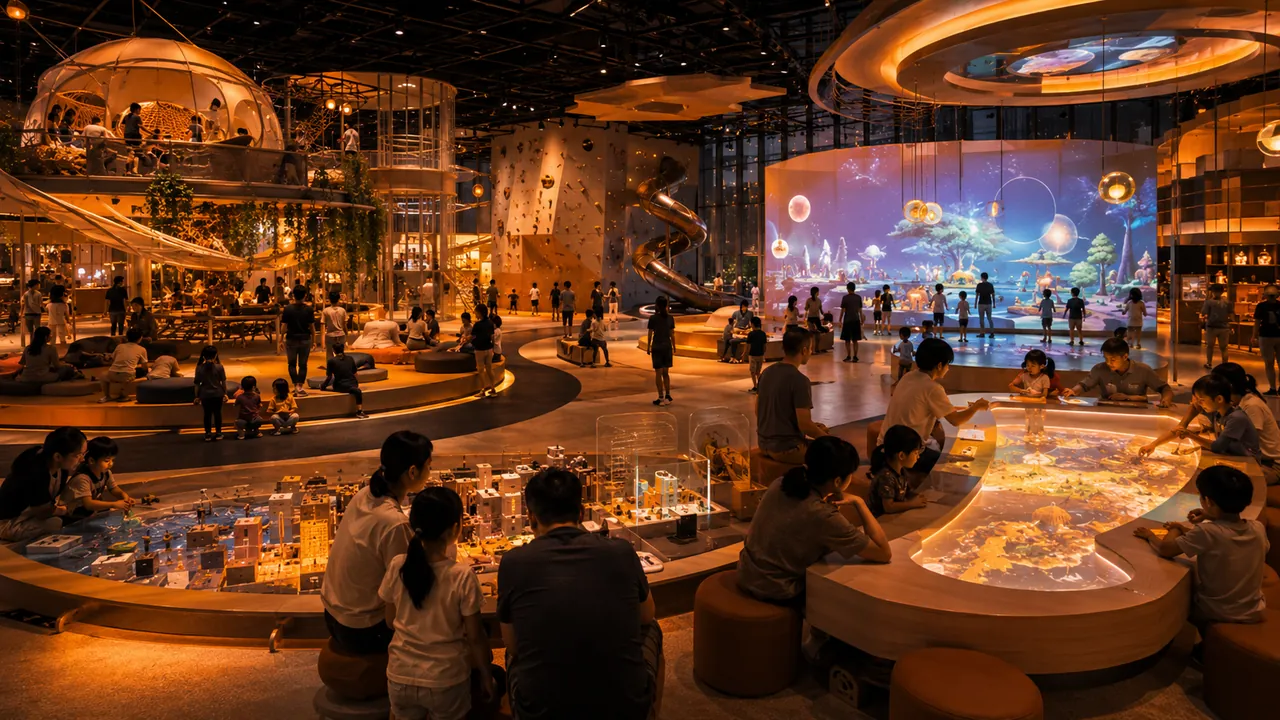
The third layer can be a permanent or semi-permanent family hub. When a full activity park is impossible, a smaller Studio, Club, creator space, or modular family experience can provide continuity without requiring a 20,000- or 30,000-square-foot FEC.
The final layer is progression and community. Families should not experience each event as disconnected from the last. Clubs, projects, passports, achievements, recurring competitions, profiles, themes, and showcases can create an ongoing relationship.
This model can work differently in different environments. Shopping malls can use it to create traffic and cross-shopping. Hotels can create richer family stays. Multifamily communities can create resident connection. Tourism destinations can connect multiple local providers into one family itinerary.
The objective is bigger than installing playgrounds.
Families can move, explore, create, develop skills, collaborate, present, meet other families, and return because something new is happening.