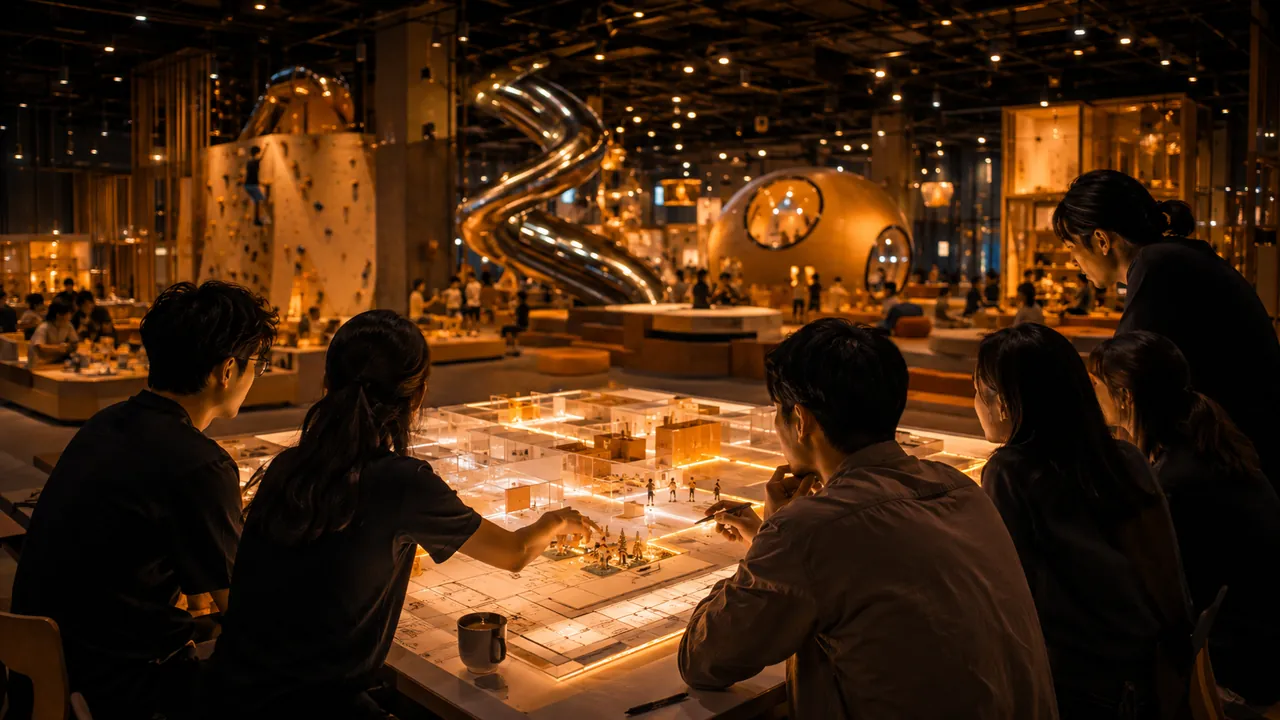
A common FEC development process starts with equipment: place the trampoline here, the climbing wall there, the arcade in another zone, and party rooms near the back.
But equipment placement is not the same thing as experience design.
Families experience a park over time. They anticipate the visit, arrive, orient themselves, explore, become active, face challenges, recover, reconnect, eat, create memories, and eventually leave.
These stages should be intentionally designed.
A useful family entertainment journey can move through anticipation, arrival, orientation, exploration, activity, challenge, mastery, recovery, social connection, creation, celebration, memory, and continuation.
Not every family follows exactly the same path. The framework simply forces operators to ask what happens between the attractions.
The emotional rhythm matters too. If everything is loud and high-energy, families become exhausted. Physical activity can be followed by lower-intensity creation, food, exploration, or recovery. Individual play can alternate with shared activities.
Storytelling can connect the experience without requiring expensive theming. A climbing structure can become an expedition. An obstacle course can become a mission. A maker activity can contribute to a larger project.
The important shift is simple:
Equipment is infrastructure. The journey is the experience.