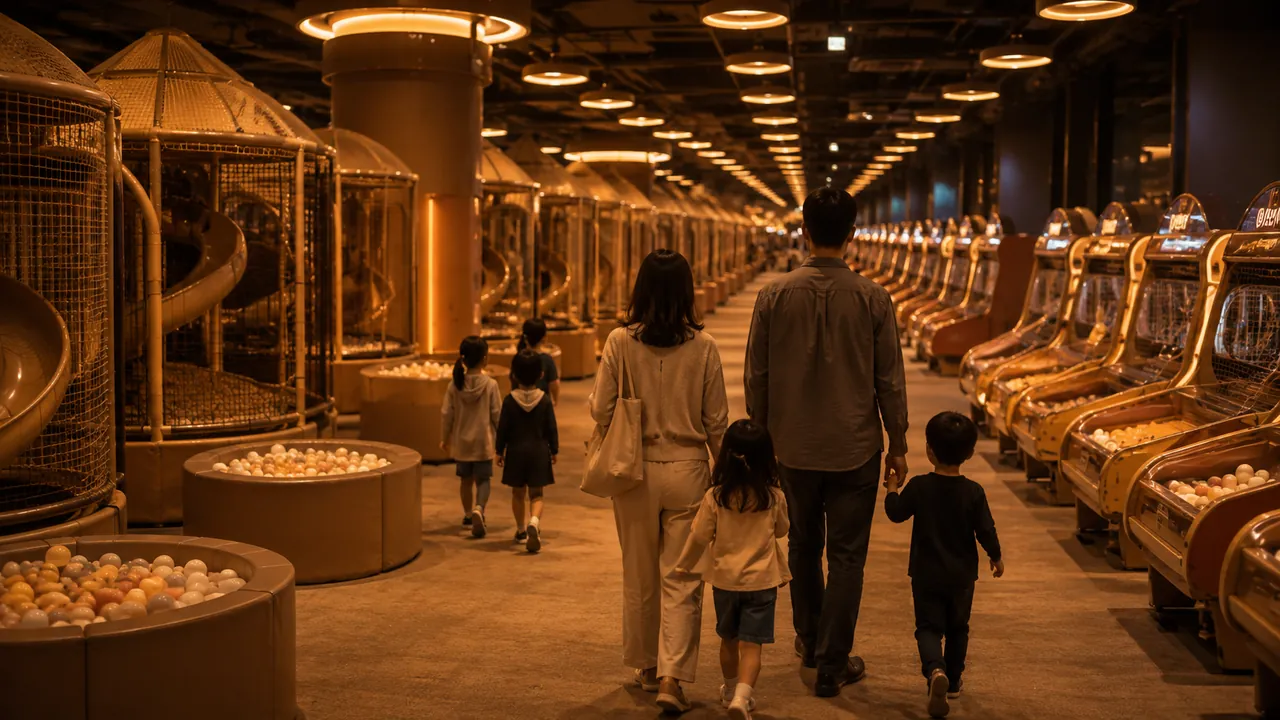
The first visit to a family entertainment park contains uncertainty. Children do not yet know how fast a slide is, how difficult an obstacle will be, where a climbing route leads, or what happens inside an interactive experience.
After several visits, many of those questions disappear. The equipment has not changed, but the child’s experience of it has.
This is novelty decay.
Dr. Maksim Godovykh discusses this problem as a form of psychological asset depreciation. A physical attraction may remain useful for ten years, while its perceived novelty declines much sooner.
The traditional solution is to replace equipment. Sometimes that is necessary, but it is also expensive. A better approach is to separate physical novelty from experiential novelty.
A climbing wall can remain the same while routes, rules, difficulty, missions, competitions, and rewards change. A trampoline court can support different games and team challenges. An interactive attraction can receive new content. A park can rotate monthly themes, tournaments, seasonal missions, and programs.
The objective is not endless novelty. Eventually novelty should become mastery.
Children can return because they have another level to reach, another challenge to complete, another project to continue, or another competition to enter. Membership then becomes access to progression instead of simply discounted access to the same experience.
Family entertainment parks should therefore ask not only how long an attraction lasts physically, but how long it remains interesting psychologically.