Novelty & Repeat Visitation
Static attractions lose novelty. Changing themes, missions, programs, levels and events create new reasons to return.
Research, data and practical frameworks for improving family entertainment — from FEC gaps and market opportunity to family behavior, repeat visitation, development strategy and new concepts.
Our FEC Gap Taxonomy identifies recurring weaknesses across traditional family entertainment. These six structural gaps are especially important to repeat visitation, family value and long-term engagement.
Static attractions lose novelty. Changing themes, missions, programs, levels and events create new reasons to return.
The same experience for every child limits relevance. Profiles, interests, recommendations, saved projects and levels make later visits more personal.
Activity without belonging is easy to replace. Clubs, teams, competitions and community programming create social reasons to return.
Parents too often wait, supervise and pay. Better concepts let adults relax, work, observe, connect, participate and understand the value.
Entertainment can do more than occupy time. Movement, thinking, creativity, problem-solving and visible outcomes can be embedded in play.
Technology should support creation, personalization, feedback and continuity — not simply add more passive screen time.
Our county-level GIS screening compares family-market demand with existing family-entertainment supply. Higher Gap Scores indicate stronger apparent need and help prioritize markets for deeper investigation.
Children create demand for the experience. Parents control the spending and return decision. Strong family entertainment must earn both forms of loyalty simultaneously.
Children become loyal when visits create strong memories, discovery, mastery, belonging and enough autonomy to make the experience feel like their own.
Parents become loyal when the experience repeatedly proves that it is safe, convenient, worth the money and genuinely valuable for their child and family.
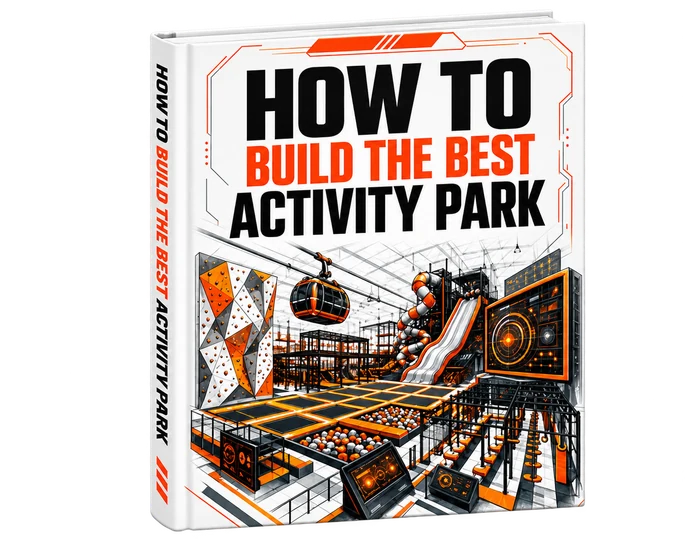
A 27-chapter practical guide for owners, operators, investors and franchisees — connecting child development, market strategy, design, finance, construction, operations, loyalty and growth in one framework.
The book complements Future Experience research by translating evidence, operating experience and strategic thinking into practical decisions for real family-entertainment projects.
We move from identifying a problem to testing a practical response, observing what families and markets actually do, and improving the strategy based on evidence.
Define a recurring weakness, unmet need, market question or operating problem.
Describe what change may create a better customer, market or business outcome.
Turn the hypothesis into a prototype, research design or practical experiment.
Study behavior, feedback, engagement, demand and other relevant outcomes.
Compare what happened with what was expected and identify what matters.
Refine the concept, strategy or operating model and repeat the cycle.
Help us improve family entertainment in shopping malls and develop new experiences requested by real families. Our AI interviewer asks a short series of open-ended questions about where your family goes, how you choose, what is missing in family entertainment today, and what you would like to see in the future.
Preliminary Interview Results
The findings show that families are looking for much more than additional attractions: affordability, activities for different ages, comfortable spaces for parents, shared family experiences, better food, cleanliness, safety, easier visit planning, and continually changing reasons to return all influence loyalty. The interviews also reveal an important emerging opportunity to combine entertainment with physical development, creativity, STEM, workshops, competitions, social interaction, and visible child achievement. The results suggest a shift from the traditional equipment-centered play venue toward a more complete family experience platform designed for children, parents, and families together.
Please briefly describe your family’s experience with family entertainment centers and indoor activity parks. You can write as much as you want, in free form, including which places you visit, where they are, who you usually go with, and anything else about your experience that you think is relevant.
Research privacy: Responses may be stored and analyzed to improve family-entertainment concepts. Please do not include children's names, school names, addresses, contact details, or other identifying information.
Three connected studies examine what families value, which combinations create the strongest park concept, and whether a new Future Experience Park model can outperform traditional family entertainment alternatives.
Share what matters in your own words, then rank ten family entertainment attributes from highest to lowest priority.
Research design: Open-ended discovery followed by compact priority ranking.
Data analysis: Average rank, top-three share, open-text themes and family-segment comparisons.
Estimated time: 8–10 minutes.
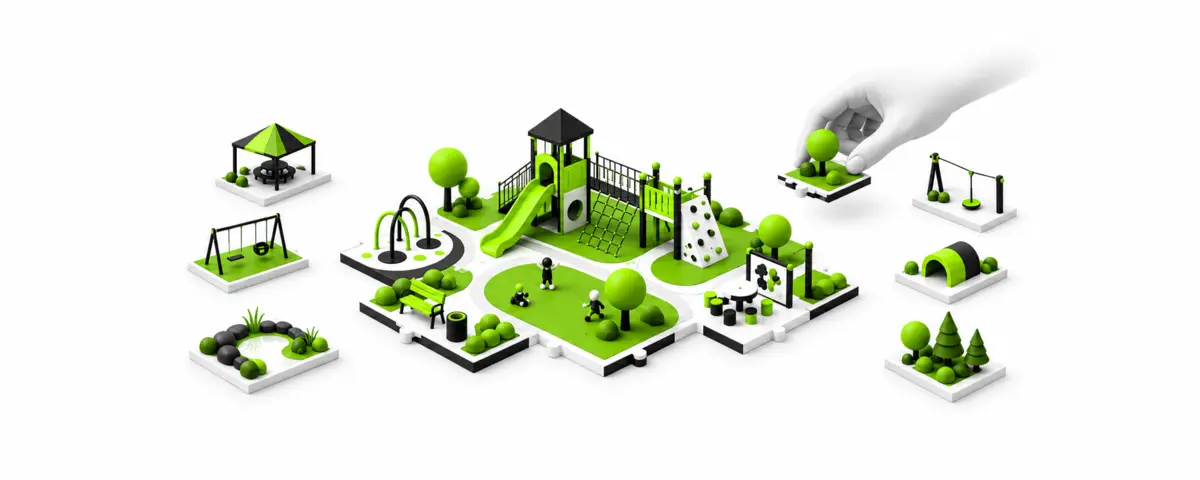
Describe your ideal park, build a preferred configuration and make several distinct trade-off decisions without repetitive A/B tasks.
Research design: Open-ended vision, structured park configurator and focused trade-offs.
Data analysis: Preferred feature levels, trade-off patterns and family-segment comparisons.
Estimated time: 10–12 minutes.
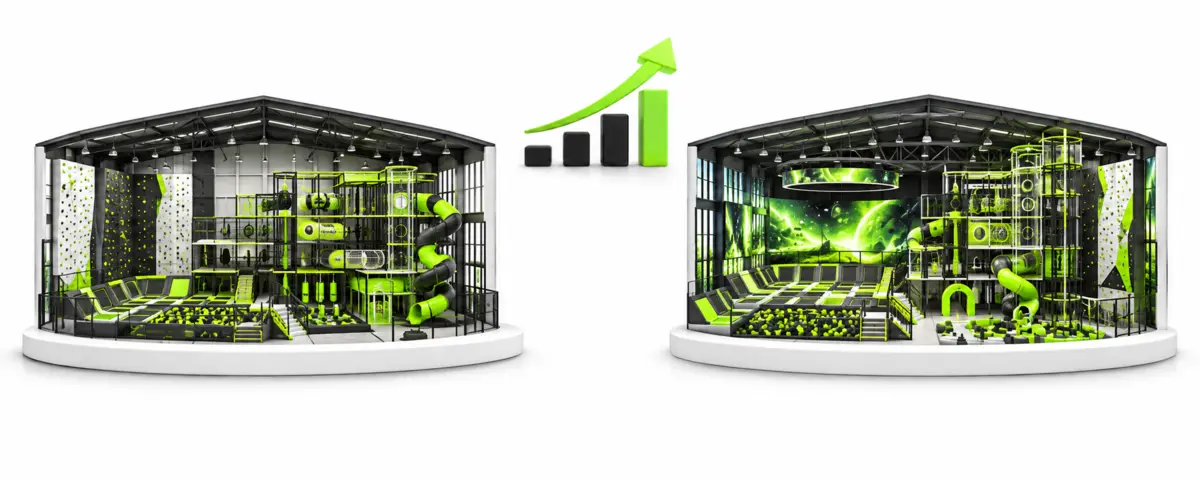
Evaluate one randomly assigned family entertainment concept. Responses will compare the optimized Future Experience Park with traditional alternatives.
Research design: Randomized monadic concept experiment.
Data analysis: Group comparisons of visit intention, repeat demand, parent value and membership interest.
Estimated time: 7–9 minutes.
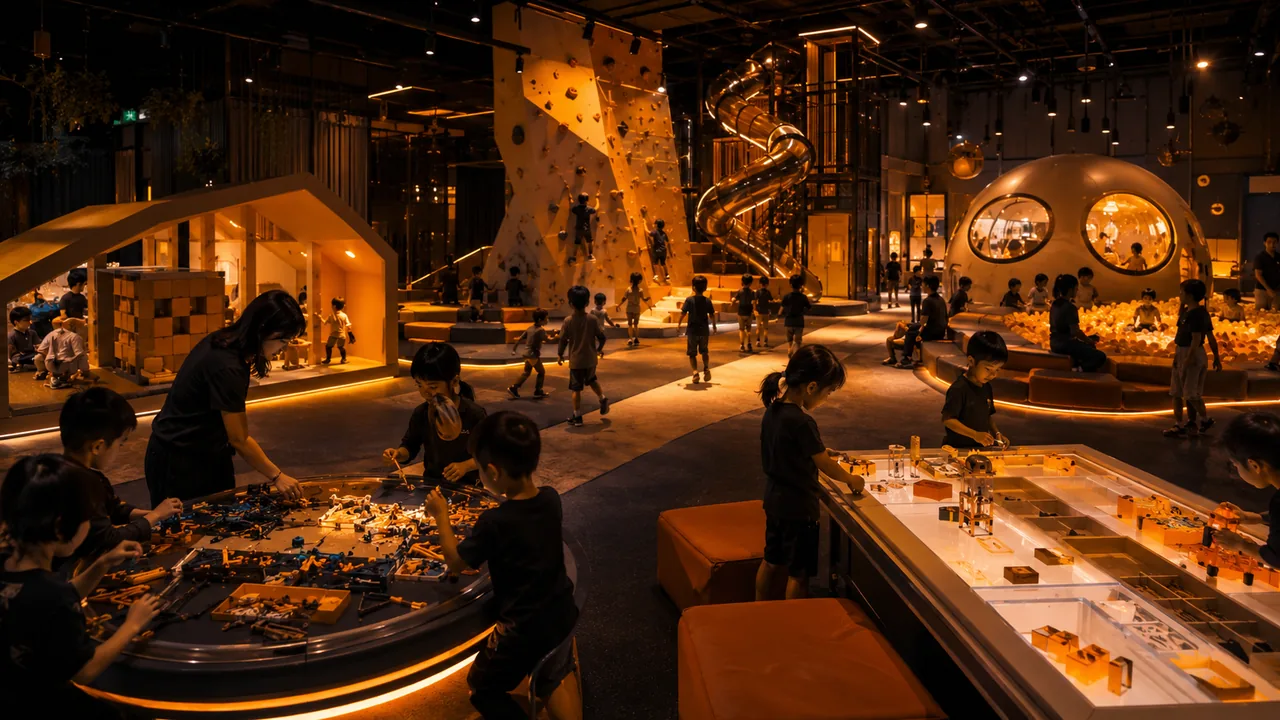
Family entertainment parks can have great attractions and still deliver a weak overall experience. The FEC Gap framework looks beyond individual equipment to identify the deeper problems that affect repeat visits, family value, development, and long-term performance.
Read article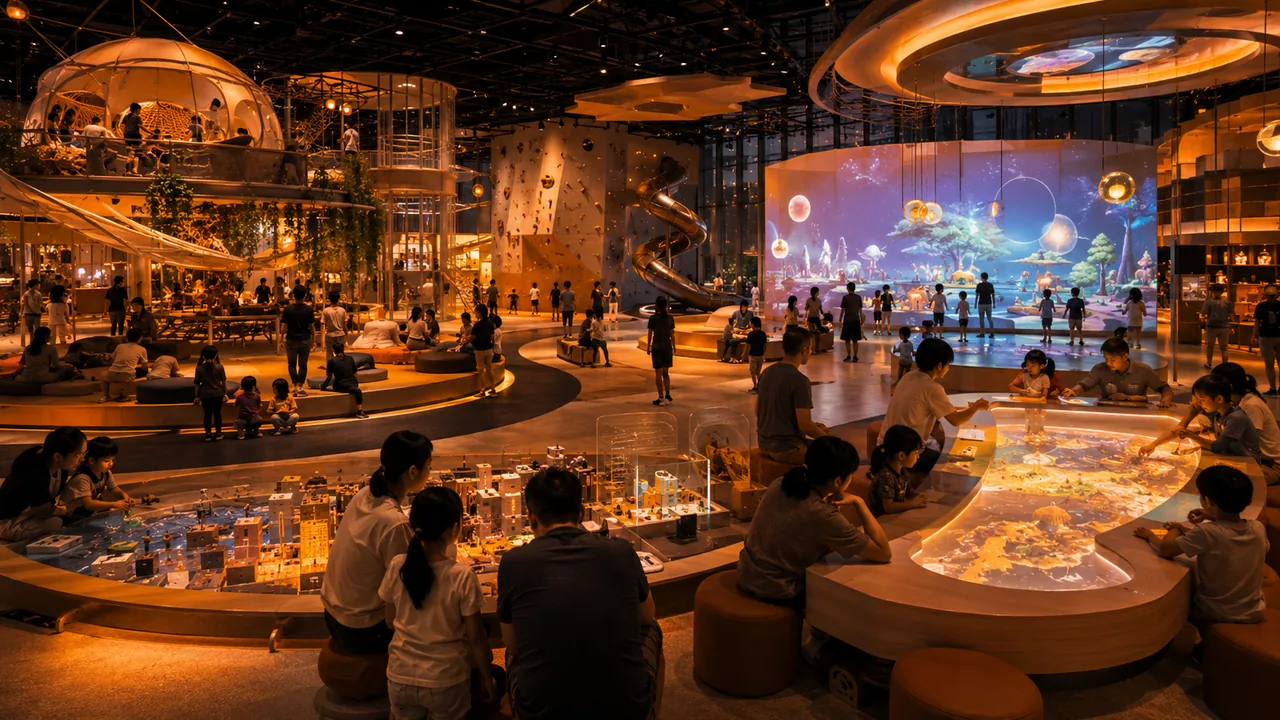
Why are children naturally attracted to climbing, jumping, slides, obstacles, exploration, and repetition? Developmental science helps explain why physical play is so powerful—and how family entertainment parks can make it even more valuable.
Read article
Family entertainment can move beyond novelty decay, static attractions, passive parent experiences, fragmented layouts, weak programming, and underused technology toward a more adaptive, development-rich model built for repeat visitation.
Read articlePreliminary qualitative interviews suggest that loyalty depends on much more than rides and attractions: affordability, multi-age value, parent comfort, shared experiences, food, cleanliness, safety, convenience, and changing reasons to return all matter.
Read articleThe next generation of family entertainment parks will not be defined by more screens, robots, or futuristic decoration. The real transformation is from a fixed attraction venue into an adaptive family experience platform.
Read articleAn attraction can remain mechanically perfect while becoming psychologically old. Novelty decay explains why repeat visitors lose interest—and how parks can create something new without constantly replacing equipment.
Read articleFamily entertainment centers and family events can help communities attract family residents, strengthen resident attachment, support child development, and create repeatable reasons for families to participate and recommend the place to others.
Read articleMany activity parks are designed around a simple assumption: children play while parents wait. Better family entertainment should create value for both sides of the family.
Read articleFamily entertainment parks should be designed as journeys, not collections of equipment. Every attraction should have a role in the larger family experience.
Read articleChild-centered amenities and experiences can strengthen family satisfaction, positive emotions, reviews, revisit intentions, and loyalty when they are integrated into the whole hotel experience.
Read articleFamilies do not choose parks, tickets, food, memberships, and return visits through perfectly rational calculations. Understanding real decision-making can make FEC pricing and experiences simpler and better.
Read articleA family entertainment park has at least two customers: the child who wants to return and the parent who decides whether the family actually will.
Read articleFamily entertainment parks constantly change prices, layouts, attractions, programs, and packages. Treating these changes as structured experiments can turn everyday operations into a continuous improvement system.
Read articleThere is no universally perfect FEC location. The best property is the one that fits the specific concept, target family, visit frequency, attraction mix, building, and capital model.
Read articleWhat is the best FEC attraction? There is no reliable universal answer. Attractions should be compared across demand, capacity, space, investment, labor, repeat use, and their contribution to the total family experience.
Read articleFamilies often say they want healthier and more diverse food, yet familiar choices remain powerful. The best FEC menu must balance what families buy with quality, kitchen complexity, party operations, and parent experience.
Read articleMalls, hotels, resorts, multifamily communities, downtowns, and tourism destinations do not always need a full FEC. They can attract families through a connected system of events, programming, smaller concepts, and recurring experiences.
Read articleRepeat visits become more valuable when children can continue projects, advance through challenges, develop mastery, and see visible progress instead of restarting the same experience every time.
Read articleImproving an existing FEC, developing a new activity park, revitalizing a shopping mall, developing multifamily housing, evaluating a market, or testing a new concept? Let's discuss.