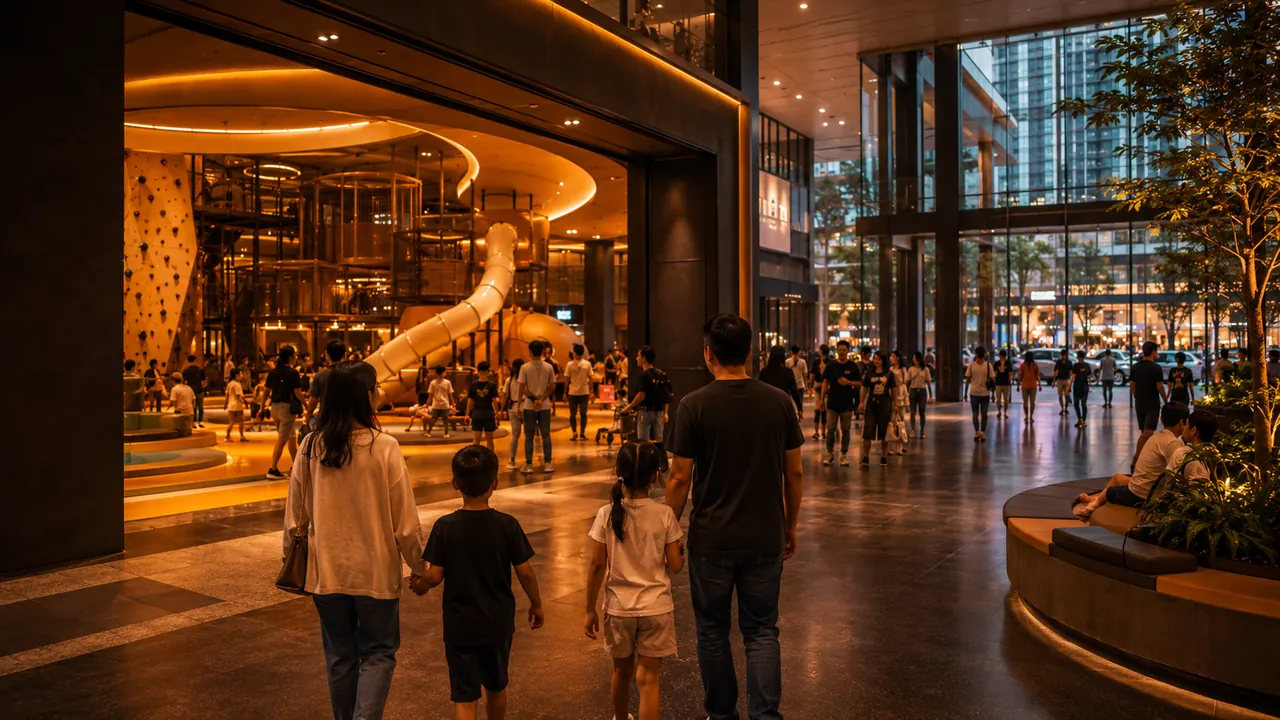
Population, income, children, competition, rent, and drive time matter when selecting an FEC location. But those numbers cannot tell the whole story.
A neighborhood creator studio and a destination adventure park should not use the same site-selection criteria.
A membership-based family club needs convenience because families may visit weekly. A major adventure attraction can draw visitors from farther away. A toddler-focused park needs different demographics and access than a venue targeting preteens and teenagers.
The physical building must also fit the concept. Ceiling height, columns, power, plumbing, parking, egress, noise, visibility, loading, structural requirements, and neighboring tenants can radically change project economics.
The article proposes a Location–Concept–Format Fit approach rather than a generic location score.
It also introduces another useful question: How painful would it be to leave?
Some investments are tied almost permanently to a property—major kitchens, structural mezzanines, built-in slides, plumbing, and large custom installations. Others can be moved: interactive equipment, furniture, creator stations, computers, robotics, modular attractions, and programming.
Smaller formats, pop-ups, and family events can therefore be useful ways to test a market before making a large permanent investment.
The strongest site is not automatically the site with the largest population or cheapest rent. It is where the market, concept, building, frequency model, and capital structure fit together.